Jane Lane and Charles II

Jane Lane and Charles II

Friday, October 7, 2011

October 7, 1651 - Heale House and Stonehenge

Now that Charles was safely hidden at Heale House and expected to be on a boat to France soon, Juliana Coningsby and the Wyndhams’ servant Henry Peters returned to Trent on October 7.  Charles was pretending to be Colonel Carliss’s servant, but Mrs. Hyde thought that in order to evade curious eyes, it would be better if they both left in the morning as if for good.  So, as Charles told Samuel Pepys, “Robin Phillips and I tooke our Horses and went as farr as Stoneheng; and there we stayd looking upon the stones for sometyme.”
Stonehenge
According to Phelips, they “rid about the Downes, and tooke a view of the wonder of that country, Stoneheng, where they found that the King’s Arithmaticke gave the lye to that fabulous tale that those stones cannot be told [meaning counted] alike twice together.  But this ariseing was the effect rather of convenience than curiositie, for that day being a faire at Salisbury, Mistris Hyde gave leave to all her servants to goe thither, whilest the King, who went away in their sight with Coll. Phelipps in the morning, after his toure taken about the Downes, returned to Hele again that afternoon in theire absence.”

Phelips had to make contact with Colonel Gounter about Charles’s passage, so “that same afternoon [he] having safely delivered the King into the hands of Dr. Henchman in the field nere Hele, went that evening (leading the Horse the king rode on) to his most faythfull friend Mr. Jones his house at Newton-Tony.”

Racton House, Col. Gounter's home, in 1789
from Alan Fea's The Flight of the King
Meanwhile, Lord Wilmot had already reached the home of Colonel Gounter at Racton  As Gounter recalled, “Betwixt eight and nine of the clock at night, the Colonel came home. Entering in att his doore, the Colonel’s ladye mett him and told him there was in the parlour a Deavonshire gentleman sent by Mr. Hyde aforesaid about a reference ‘which none besides yourselfe can decyde.’  At the Colonel’s coming in, he found his Devonshire gentleman setting at one end of the chimney, [his brother] Captaine Thomas Gounter att the other, and his lady (which was gone in before) in the middle.  The gentleman rose and saluted him.


Col. Gounter in 1642
“The Colonel presently knew him to bee the Lord Wilmot.  Which the noble Lord perceyving, tooke the Colonel aside to the windowe: ‘I see you know mee (said he); do not owne mee.’”  Throughout his journeys, Wilmot continued to be surprised that people who knew him recognized him, even though he was not in disguise.

“After a bottle of sack, which afforded some matter of discourse by reason of twoe wasps, or rather hornets, which came out at the opening, a short collation being made readie as soon as could [be] … my Lords man, one Swan, comming in to waite, whispered his master in the eare and told him my Lord Wentworth’s boy Ponie was without, and wished him to be carefull, for feare the boy should knowe him.”

After supper, “the noble Lord and Colonel being alone, he broke the busines unto the Colonel with these words, sighing: ‘The King of England, my maister, your maister, and the maister of all good Englishman, is neere you, and in great distresse.  Can you helpe us to a boate?’ The Colonel, looking very sadly, after some pause said, ‘Is he well? Is he safe?’  He said ‘Yeas.’  The Colonel replyed, ‘God be blessed.”

Wilmot told Gounter that the plan when he had left Salisbury was that the king should be brought to Gounter’s house on Wednesday.  Gounter was very willing to help, but told Wilmot “for all he lived so neere the sea, yet there was noe man living soe little acquainted with” seafaring men, but he would do all within his power.
Interior of Racton House in 1789
When he left Wilmot and went to his bedroom, he found that his wife was very suspicious.  She was sure that Wilmot was not the Mr. Barlow he claimed to be, and that his presence surely meant danger.  He tried to reassure her that all was well and she didn’t need to worry, but she said “Shee was confident there was more in it then soe, and enough, shee doubted, to ruine him and all his family,’ … breaking out into a very great passion of weeping.”
So, “the Colonel … tooke a candle, pretending to goe into the next roome; but privately to my Lord Wilmot.”  He told Wilmot how upset his wife was and asked permission to let her know what was going on.  Wilmot agreed.  Gounter explained the situation and “wiped the teares of his ladyes eyes, whoe, smiling, said ‘Goe on, and prosper.  Yet I feare you will hardly doe it.’”

Mrs. Hyde of Heale House

Back at Heale House, Charles was safely ensconced in a hiding hole, and no one but Mrs. Hyde and her sister knew he was there.

Thursday, October 6, 2011

October 6, 1651 - from Trent to Salisbury

After a stay of ten days at Trent, following his original stay of several days, Charles was finally ready to set out once again, hoping that the newest plan to get him safely out of the country would succeed. 

At about ten o’clock on the morning of Monday, October 6, as Anne Wyndham wrote, “his majesty took leave of the old Lady Wyndham, the colonel’s lady [Anne herself], and family, not omitting the meanest of them that had served him; but to the good old lady he vouchsafed more than ordinary respect, who accounted it her highest honour that she had three sons and one grandchild slain in the defence of the father, and that she herself, in her old age, had been instrumental in the protection of the son, both kings of England.
“Thus his sacred majesty, taking Mrs. Juliana Coningsby behind him, attended by Colonel Robert Phelips and [Wyndham’s servant] Peters, bad farewell to Trent, the ark in which God shut him up when the floods of rebellion had covered the face of his dominion.”

The party “went under the conduct of Coll. Phelipps in private ways,” Phelips recounted, “(all that country being well known to him) nere 40 myles that day to the house of the Widdow Hyde at Hele, 3 myles distant from Salisbury, a very discreet gentlewoman.  Hither was Dr. Henchman come before from Salisbury to provide for theire reception.”
Thomas Blount's Boscobel describes the journey.  "The travellers passed by Wincanton, and near the midst of that day's journey arrived at Mere, a little market town in Wiltshire, and dined at the George inn; the hoast, Mr. Christopher Phillips, whom the colone knew to be perfectly honest.
The George Inn, Mere
from Alan Fea's The Flight of the King
"The hoaste sat at the table with his majesty [Charles was once more pretending to be Will Jackson, this time a servant of Phelips], and ... told the colonel, for news, that he heard the men of Westminster (meaning the rebels), notwithstanding their victory at Worcester, were in a great maze, not knowing what was become of the king; but (says he) it is the most received opinion that he is come in a disguise to London, and many houses have been searched for him there: at which his majesty was observed to smile.
Interior of the George Inn, Mere
from The Flight of the King
"After dinner, mine hoast familiarly asked the king 'if he were a friend to Caesar?' to which his majesty answered, 'Yes.'  'Then,' said he, 'here's a health to King Charles,' in a glass of wine, which his majesty and the king both pledged....  And his majesty, since his happy return, has been pleased to ask 'What was become of his honest hoast at Mere?'"
According to Alan Fea's 1908 The Flight of the King, "Once more upon their way, the road to Salisbury is in a direct line, nearly due east, but in the seventeenth century this part of the country was but little enclosed, so that the journey to Heale could be accomplished if necessary without hardly touching a village."
In the evening they reached Heale House, on the banks of the Avon near Amesbury in Wiltshire. This was the home of Mary Hyde, widow of Laurence Hyde, the eldest brother of Sir Robert Hyde, Justice of Common Pleas, and a cousin to Charles’s chancellor Edward Hyde, and so a staunchly Royalist lady. 
In 1680, Charles told Samuel Pepys, “I came into the House just as it was almost dark (with Robin Phillips only) not intending at first to make myselfe knowne.  But just as I alighted at the Doore, Mrs. Hide knew me, though she had never seen mee but once in her life, and that was with the King my Father, in the Army, when we marched by Salisbury some yeares before in the time of the Warr.  But she being a discreet Woman took noe notice at that time of me, I passing only for a friend of Robin Phillips’s, by whose advice I went thether.

Old fireplace at Heale House
from The Flight of the King
“At supper there was with us Frederick Hyde, (since a Judge) and his sister in law a Widdow, Robin Phillips, my Selfe, and Dr. Henshaw (since Bishop of London) whome I had appointed to meet me there.

“While we were at supper I observed Mrs. Hyde and her Brother Frederick to looke a little earnestly at me, which ledd me to beleive they might know me.  But I was not at all startled at it, it having been my purpose to lett her know who I was.  And accordingly after supper Mrs. Hyde came to me, and I discovered my selfe to her, who told me shee had a very safe place to hide me in, till we knew whether any ship was ready or noe.  But she sayd it was not safe for her to trust any Boddy but her selfe and her sister, and therefore advised me to take my Horse the next morning, and make as if I quitted the House, and returne again about night.  For she would order it soe, that all her servants and everybody should be out of the House but her selfe and her sister, whose name I remember not.”

Wednesday, October 5, 2011

September 25 – October 5, 1651 - a second stay at Trent

Charles arrived back at Trent with Frank Wyndham and Juliana Coningsby on September 24.  It had now been three weeks since the Battle of Worcester, and he was seemingly no closer to getting out of England than he had been when he arrived at Whiteladies towards dawn on September 4.  Rumors of what had become of him were flying and there were printed accounts of his having escaped to Scotland and of his having been killed at Worcester.  There were also persistent rumors of his being somewhere in disguise, possibly dressed as a woman, or even wearing a red periwig and serving under a Roundhead gentleman in Cromwell’s army.
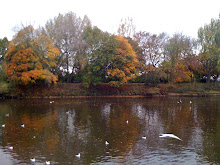
Autumn foliage near Trent Manor
Now once more an escape had fallen through and he had to try to come up with a new plan. He was fortunate to have the Wyndhams working to find a way to help him get out of the country, as they had more connections than others who had helped him, and were able to keep him concealed while they worked on his behalf.  As it turned out, Charles remained hidden in the house through October 5, occupying his time by boring holes in gold coins to give as souvenirs and cooking his own meals at the fireplace in Lady Wyndham’s room.

The garden of Trent Manor from Charles's room
Fortuitously, Frank Wyndham’s brother-in-law Edward Hyde, a cousin of Charles's chancellor Edward Hyde, came to dinner at Trent on the day the king returned there.  He happened to mention to Frank that he had seen Colonel Robert Phelips at Salisbury.  The Phelipses were a well-known Royalist family who had had their estates sequestered because of their support of Charles I, and it seemed likely that they might be able to help the king.  Wyndham consulted with Charles, who agreed that Robert Swan, leaving to join Lord Wilmot at Salisbury, where Wilmot hoped to find a way to get Charles out of the country, should instruct Wilmot to make contact with Robert Phelips.
Col. Francis Wyndham
from The Flight of the King
Wilmot reached Salisbury on September 25.  As Wyndham had previously suggested, he went to the King’s Arms, sent for Wyndham’s relative John Coventry, and explained the king’s predicament.  

John Coventry's House, Salisbury
from The Flight of the King
Coventry sent for Colonel Phelips, who fortunately knew Wilmot as well as Wyndham.  Even so, it was risky discussing things openly, so Coventry went into the next room to smoke a pipe of tobacco with Hewett, the landlord of the inn, leaving Wilmot and Phelips to talk privately.
Interior of the King's Arms, Salisbury
from The Flight of the King

Wilmot asked Phelips “whether he could help a gentleman in distress out of the kingdome.” Phelips was a little cold, and soon it came out that he had heard that Wilmot had been too friendly with the Earl of Argyll’s faction, to the detriment of the king.  At this, Wilmot told Phelips that not only was that not true, but that it was the king who needed his assistance.  Phelips was astonished, and dismayed at the difficulty of finding a way to get Charles to safety, but agreed to do whatever he could. 


When Coventry returned and asked, “Well, gentlemen, are you agreed?” they said they were.  Before parting, the three men shared a bottle or two of wine, and Wilmot regaled them with the story of what had happened at Worcester and since then.  Wilmot sent Henry Peters back to Trent to report to the king “this joyful message … that he doubted not … to be able in some short time to effect his desires.”
The next day, September 26, Phelips went to Southampton to speak to a merchant named Horne who he thought could be of assistance, but didn’t manage to connect with him until the next day.  Phelips told Horne he needed a ship to take him and a friend or two to France.  Horne, no doubt understanding that whatever was going on needed to be handled discreetly, said he knew a captain who was “soe honest a fellow that I would trust ten thousand lives, if I were master of as many, in his hands,” and that he would speak to him.   Phelips instructed him, “Doe not only speake with him but come to some agreement with him.”  Horne replied, “I will, and because I would not have you appear soe much in the towne I will bring him to you to morrow by 3 of the clock in the afternoon to Redbridge.”   

When they met the next day, the master of the ship agreed to carry some passengers to France for forty pounds.  Phelips gave him twenty pounds to provision his boat and hire his crew, and the master promised that his vessel would be at anchor between Southampton and Calshot Castle by the following Wednesday, October 1.

Meanwhile, Wyndham had also enlisted the help of his neighbor, Captain Thomas Littleton, and Littleton had gone off to Hampshire to see if he could find a ship for the king. He spoke to a Mr. Standish, who introduced him to a ship captain who agreed to take Lord Wilmot and some friends away from England.  But when Colonel Phelips’s brother Edward Phelips arrived at Trent with the news that his brother had hired a boat at Southampton, Littleton’s efforts were put on hold.
Since plans seemed to be moving along well, Charles’s friends wanted him close at hand.  They thought he could safely hide at Heale House, about three miles from Salisbury.  This was the home of Mary Hyde, the widow of a cousin of Charles’s chancellor, and “a worthy discreet loyall lady.”

The King's Arms, Salisbury
from The Flight of the King
On October 1, Coventry’s chaplain John Sellick arrived at Trent with a letter for Charles, informing him of the latest developments.  “In answer to which the king wrote back, that he desired all diligence might be used in providing a vessel, and if it should prove difficult at Hampton; trial should be made farther; that they should be ascertained of a ship before they sent to remove him, so that he might run no more hazards than what of necessity he must meet with in his passage from Trent to the place of his transportation.”
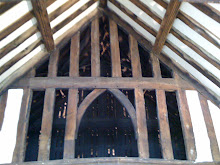
Ancient outbuildings at Trent Manor
Unfortunately, when Colonel Phelips arrived on October 1 for the rendezvous with the master of the bark he had hired, he learned that the vessel had been pressed into service to carry provisions to Cromwell’s fleet at Jersey.  Thinking it unwise to make further attempts to hire a boat there, he went back to Salisbury and consulted with Wilmot, John Coventry, and a cleric named Humphrey Henchman, who had been ejected as Canon of Salisbury Cathedral during the wars, and after Charles’s Restoration became Bishop of Salisbury and London. 

Humphrey Henchman
painted by Sir Peter Lely
These gentleman now decided to extend their efforts eastward, and to see if they could hire a boat on the Sussex coast.  Both Phelips and Henchman knew a Colonel George Gounter, who lived at Racton, near Chichester.  Gounter was married to Katherine Hyde, a first cousin of Charles’s chancellor and sister-in-law to the Mrs. Hyde at Heale House.  So Katherine’s nephew Lawrence Hyde of Hinton Daubnay in Hampshire was sent to Gounter with a letter asking for his help.

For some reason Wilmot decided to speak to Lawrence Hyde himself, and set off with his trusty man Robert Swan.  On his way to Hinton Daubnay, he went to see Thomas Henslow at Burchant, near Titchfield, the home of the Earl of Southampton, one of Charles I’s most loyal supporters.  Henslow got a message to Southampton, who offered to do all that he could to find a ship for the king.

When Wilmot arrived at Lawrence Hyde’s house he encountered Captain Thomas Gounter, a cousin of Colonel George Gunther, who took him to meet George Gounther at Racton.
Charles's chancellor Edward Hyde
about 1648-55
Meanwhile, Colonel Phelips had set off for Trent to convince Charles to move closer to the scene of the action.  On Sunday, October 5, according to Anne Wyndham, Phelips "came from the Lord Wilmot and Mr. Coventry to his majesty with this assurance, that all things were ready, and that he had informed himself with the most private ways, that so he might with greater probability of safety guide his majesty to the sea-side.  As soon as the king heard this message, he resolved upon his journey.  Colonel Wyndham earnestly petitioned his majesty that he might wait on him to the shore; but his majesty gave no grant, saying it was no way necessary, and might prove very inconvenient.  Upon the renewing this request, the king commanded the contrary, but sweetened his denial with this promise, that if he were put to any distress, he would again retreat to Trent.”

Thursday, September 29, 2011

September 24, 1651 - a wild goose chase

The wee hours of September 24, 1651 found Charles holed up in the top floor of the George Inn at Broadwinsor with Lord Wilmot, Frank Wyndham, and Juliana Coningsby, unable to go anywhere because the inn was full of Parliamentary troopers who had stopped on their way southward. 

An innyard in Shropshire
Once more Charles had had a carefully laid plan fall apart.  When the soldiers finally left near dawn, according to Anne Wyndham, “His majesty having with an evenness of spirit got through this rough passage, safely anchored at Broadwinsor … at length enjoying some rest, he commands the colonel [Wyndham] to give his opinion what course was to be taken, as the face of affairs then looked.  The colonel (seeing forces drawn everywhere upon that shore) thought it very hazardous to attempt anything more at Dorsetshire, and therefore humbly besought his majesty that he would be pleased to retreat to Trent: he hoped his majesty was already satisfied in the fidelity of his servants, and that he doubted not his majesty might lie securely in that creek, till it was fair weather and a good season to put forth to sea.”

Wyndham suggested that his servant Henry Peters should accompany Lord Wilmot to the King’s Arms at Sarum (Salisbury), “where he and many of his friends had sheltered in the time of troubles.”  Peters would put Wilmot in touch with Wyndham’s relative John Coventry, “with whom he had kept intelligence, in order to the king’s service, ever since his majesty had set foot in Scotland, and Wyndham assured Charles that Coventry “would think himself highly honored to correspond in this matchless employment, the king’s preservation.” 
King's Arms, Salisbury, about 1908
drawing from Alan Fea's The Flight of the King
Salisbury and Trent were thirty miles apart, and messengers could easily be sent to and fro to keep the king informed of plans to get him out of the country. So Wilmot and Peters set off northeast toward Salisbury, and Charles rode north and a little west with Frank Wyndham and Juliana Coningsby.

Now – how did it happen that a party of soldiers had been pursuing the king the previous day?
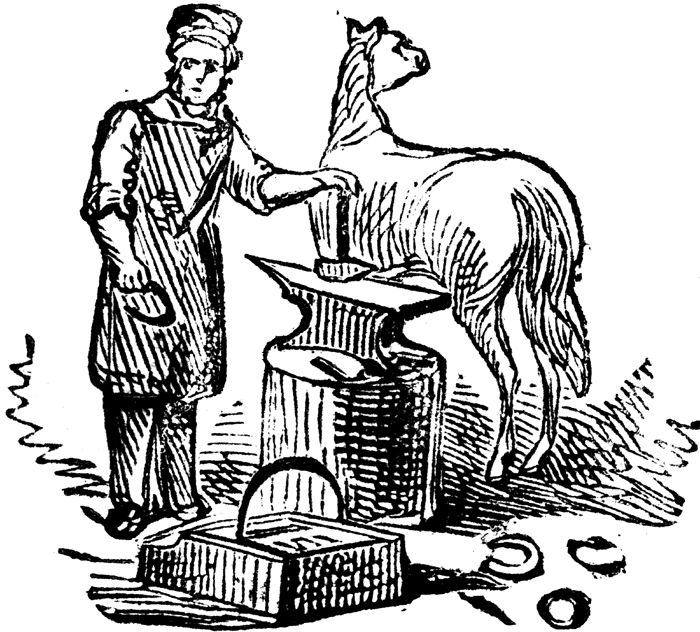
After Charles left the Queen’s Arms at Charmouth, Wilmot discovered that his horse had cast a shoe, and he asked the ostler at the inn to take it to the blacksmith.  According to William Ellesden’s account, the smith, a man named Hammet, said, “This horse hath but three shoes on, and they were set in three several counties, and one of them in Worcestershire.” 

A suspicious blacksmith

As it happened, the ostler was “one of Captain Macy’s soldiers, a notorious knave,” working at the inn to make a little extra money.  His curiosity had already been aroused the night before when Wyndham and Peters “went out so late at night toward the seaside, and … the rest of the company, during their absence, were more private than travellers are wont to be, and perhaps inspired and prompted by the devil, [he] suspected one of these guests to be the king.”

The smith’s words only confirmed the ostler’s suspicions, and he told the landlady of the inn what he thought.  She, who might already have guessed the same thing, “very passionately rebuked the ostler for these insolencies, hoping by that means to put a stop to his (as she judged) treasonable projects.”  But the ostler would not be put off, and sought out the local parson, the Reverend Doctor Benjamin Westly, the great-grandfather of John Wesley, founder of the Methodist movement.

The parson, however, was praying, and would not be disturbed. The ostler, worried about losing his tip if he wasn’t there when Wilmot’s horse was ready for him, went back to the inn.  But after Wilmot had left, the ostler returned to Westly, now done praying, and confided his suspicions.  Both of them confronted the landlady, who seems to have been related to Mistress Quickly of Falstaff’s local, the Boar’s Head Tavern in Eastcheap.

Mistress Quickly, right, watches Falstaff
Westly: Why how now, Margaret? You are a maid of honor now.
Landlady: What mean you by that, Mr. Parson?

Westly: Why, Charles Stuart lay last night at your house, and kissed you at his departure; so that now you can’t but be a maid of honor.
Landlady: I’faith, you are a scurvy, ill-conditioned man, to go about to bring me and my house into trouble.  But if I thought it was the king, as you say it was, I would think the better of my lips all the days of my life; and so, Mr. Parson, get you out of my house, or else I’ll get those shall kick you out.

The parson and the ostler now went off to the justice of the peace, “and earnestly pressed him to raise the county by his warrants…. But he … thinking it very unlikely that the king should be in these parts, notwithstanding all the parson’s bawling and the strong probabilities upon which their conjectures seemed to be grounded, utterly rejected his council, fearing lest he should make himself ridiculous to all the county by such an undertaking.” 
The ostler finally did what he should have done in the first place, and went to his commanding officer. Captain Macy (or Massey, depending on the account), no doubt keenly conscious of the thousand pound reward for the king’s capture as well as his duty, “having no sooner received the report of these surmises, and information on what horses and in what equipage, and which way the persons suspected made their departure from Charmouth …instantly resolves to leave no means unattempted, that with the least show of probability might conduce to his majesty’s attachment.

“In pursuance of which he presently mounts, and setting spurs to his horse, in a full career he rides toward Bridport, where, at his arrival, after a little inquiry made, he was given to understand that some persons, with whom the descriptions he had received most exactly suited, had dined at the George that day, but not long before his coming were departed towards Dorchester.  This, therefore, was the next place to which he posted … which he no sooner entered, but (as if he had been to execute some warrant for the apprehending the most notorious felon in the kingdom … he searched all the inns and alehouses in the town.”
Oliver Cromwell
who very much wanted to capture Charles

According to Anne Wyndham, “the report of the king’s being at Charmouth was grown so common, that the soldiers … searched the houses of several gentlemen who were accounted royalists, thinking to surprise him.”  Pilisdon, the home of Sir Hugh Wyndham, Frank Wyndham’s uncle, “was twice rifled." 
Sir Hugh Wyndham
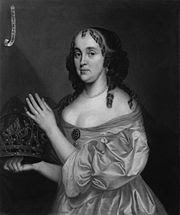
A young lady of the mid 17th century
not looking much like Charles II
"They took the old baronet, his lady, daughters, and whole family, and set a guard upon them in the hall, whilst they examine every corner, not sparing either trunk or box.  Then taking a particular view of their prisoners, they seize a lovely young lady, saying she was the king disguised in woman’s apparel.  At length being convinced of their gross and rude mistake, they desisted from offering any further violence to that family.” 

Just as alarmingly, Captain Ellesden, who had undertaken to find a ship for Charles but perhaps was now trying to hedge his bets, arrived at Pilisdon, “and enquired of Sir Hugh and his lady for the king and colonel, confidently affirming that they must needs be there.”
But, as Ellesden wrote triumphantly (much later, when it was safe once more to be a Royalist), “God … was graciously pleased to make this furious hunter to overrun the game he hunted for.”

Macy and his men didn’t get to the George at Broadwinsor, and by the next day, Charles had once more safely reached Trent Manor, where he could bide his time in Lady Wyndham’s chamber with its priest hole.

Wednesday, September 28, 2011

September 23, 1651 - more close calls!

On the night of September 22, 1651, Charles sat up late at the inn at Charmouth with Lord Wilmot, Frank Wyndham, Juliana Coningsby, and Wyndham’s servant Henry Peters, waiting for the boat that was to come in on the tide around midnight and carry him to safety. 
As Anne Wyndham recounted, “they remained all night expecting; but seeing no long-boat, neither hearing any message from the master of the ship, at the break of day the colonel returns to the inn, and beseeches the king and the lord Wilmot to haste from thence… The lord Wilmot was desirous to stay behind a little, promising to follow the king to Bridport, whence his majesty intended to make a halt for him.”
But of course once more nothing went right.  Setting out from Charmouth with Wyndham and Juliana Coningsby, one of the travelers Charles passed on the road was a man who had been a servant to his father, and who also knew Wyndham, and obviously recognized both of them.  Fortunately, the man was discreet enough not to greet them and so draw attention to them.
The George Inn at Bridport around turn of 20th century
photo from 1908 edition of Alan Fea's The Flight of the King
Further adventures lay ahead when they got to Bridport.  As Charles told Samuel Pepys many years later, “just as we came into the Towne, I could see the Streets full of Redd-Coates, Cromwells Soldiers (being a Regiment of Coll. Haynes’s … (1500 men going to imbarke to take Jerzey) at which Franck Windham was very much startled, and asked me what I would doe.  I told him that we must goe impudently into the best inn in the Towne and take a Chamber there, as the only thing to be done, because we should otherwise miss my Lord Willmott…. So we Rodd directly into the best Inn of the place and found the Yard very full of Soldiers.  I alighted, and takeing the Horses thought it the best way to goe blundering in among them, and lead them through the middle of the Soldiers into the Stable, Which I did and they were very angry with my for my rudeness.

Inn yard of Queen's Head, Southwark, 1880
the yard of the inn at Bridport was probably similar

“As soon as I came into the Stable I took the Bridles off the Horses, and called the Ostler to me to help me give the Horses some Oates.  And as the Ostler was helping me to feed the Horses, Sure, Sir (Sayes the Ostler) I know your face.  Which was noe very pleasant Questian to me, but I thought the best way was to ask him where he had lived? Whether he had alwayes lived there or noe? He told me, that he was but newly come thether, that he was borne in Exeter and had been Ostler in an Inn there, hard by one Mr. Potter’s a Merchant, in whose House I had laine in the time of War.  Soe I thought it best to give the fellow noe further occacion of thinking where he had seen me, for feare he should guess right at Last. 

“Therefore I told him, Friend, Certainly you have seene me there at Mr. Potters, for I served him a good while, above a yeare.  Oh, sayes he, then I remember you a Boy there, and with that was putt off from thinking any more on it but desired that we might drinck a Pott of Beere together. Which I excused by saying that I must goe waite upon my Maister, and get his dinner ready for him, but told him, that my Maister was goeing to London and would return about three Weekes hence, when he would lye there, and I would not faile to drink a pott with him.”
Another view of the yard of the Queen's Head, Southwark
Judging Bridport too dangerous to stay in now, as soon as the party had eaten, “we rode out of Towne as if we had gone upon the Roade towards London, and when we gott 2 Myle off, my Lord Willmott overtooke us, he having observed while in Towne where we were, and told us that he beleived the Shipp might be ready next night, but that there had been Some mistake between him and the Maister of the Shipp.”
At this point occurred one of the many incidents that led the whole saga of Charles’s escape to become known as the Royal Miracle.  As the king and his companions made their way toward Bridport, a company of soldiers was on their trail.  How and why that came to pass I will save for another post.  But the king and his party were feeling spooked, and decided to leave the main road whenever they had the opportunity, and find their way back to Trent.  So when they came to Lee Lane, a small track branching off the main road near Bradpole, they took it, although none of them knew the area.  They were to learn later that taking this alternate route had saved them from certain capture by the troop of cavalry that had thundered by only a few minutes after they left the Dorchester Road.  This bit of serendipity came to be known as the Miraculous Divergence.

1911 re-enactment of the Miraculous Divergence
West Dorset Pageant, July 20, 21, 22
from A.M. Broadley's The Royal Miracle

Stone placed by A.M. Broadley, 1911
to commemorate the Miraculous Divergence
Having taken an unfamiliar road, Charles and his companions didn’t know where they were when they reached a village out in the country about four miles from Lyme.  Wyndham went in to the inn, the George, to make inquiries, and by good luck it turned out that he knew the innkeeper, and knew him to be a staunch Royalist.  He told the man that he and his brother-in-law, Bullen Reymes, who Wilmot strikingly resembled, had broken their paroles by being more than five miles from home and needed a quiet place to spend the night.  The innkeeper put the party in the top story of the inn and brought them supper himself. 


George Inn, Broadwindsor
drawing by Alan Fea, from The Flight of the King
Now came another scare.  A detachment of the Cromwellian Colonel Haines’s regiment, on its way to the coast to ship for Jersey, arrived at the inn at Broadwindsor.  Now Charles and his companions were trapped.  But as happened so often during his odyssey, a piece of bad luck was balanced with an astonishingly good one, at least for the king.  A woman with the soldiers went into labor.  The local authorities found out about it, and fearing the parish would end up bearing the cost of caring for the mother and child, they arrived at the inn to confront the soldiers, and “there arose a very hot conflict.”  While the poor woman was in labor in the kitchen, “this dispute continued till such time as … they were to march to the seaside.”  So everyone who might have taken notice of the fugitive king was too busy to notice him.  Once more, Charles had dodged a bullet.

Outbuilding at George Inn, Broadwindsor
drawing by Alan Fea from The Flight of the King

Monday, September 26, 2011

September 22, 1651 - off to Charmouth

On September 22 Charles set out for Charmouth, with Juliana Coningsby riding pillion behind him as Jane Lane had done, so that he seemed to be her manservant.  As Anne Wyndham wrote, Colonel Frank Wyndham “was his majesty’s guide, whilst the Lord Wilmot, with [Wyndham’s servant] Peters, kept at a convenient distance, that they might not seem to be all of one company.

“In this manner travelling, they were timely met by Captain Ellesden, and by him conducted to a private house of his brother’s among the hills, near Charmouth.  There his majesty was pleased to discover himself to the captain, and to give him a piece of foreign gold, in which in his solitary hours he made a hole to put a ribbon in.”
Ellesden's Farm
from the 1908 edition of Allan Fea's The Flight of the King
Captain Ellesden accompanied the royal party to the Queen's Arms, the little inn at Charmouth, to wait in the room that Peters had reserved for the supposed runaway bridal party. 
The Queen's Arms as it appaeared in the early 19th century
from The Flight of the King
The plan, as Charles told Samuel Pepys years later, was that Stephen Limbry’s boat was “to come out of the Cobb at Lyme, and come to a Little Crick that was just by this Village,” and that Limbry would send the “Boate a Shoare to take is in at the said Creck and carry us over to France, the winde being then very good in the North.”
Interior of the Queen's Arms
from The Flight of the King
About an hour after Ellesden took leave of the king, according to Anne Wyndham, “came Limbry to the inn, and assured the colonel all things were prepared, and that about midnight his long-boat should wait at the place appointed.  The set hour drawing nigh, the colonel, with Peters, went to the sea-side (leaving his majesty and the Lord Wilmot in a posture to come away upon call.” 
The Queen's Arms
from The Flight of the King

Thursday, September 22, 2011

September 20 and 21, 1651 - a new plan!

After more setbacks, Charles now had a new plan.  His host Frank Wyndham had arranged for a boat to put in at Charmouth on the night of September 22, which would carry the Charles and Wilmot to a waiting ship bound for France. 

Wyndham’s first idea had been that the king’s party should travel to Lyme during the day and then go to Charmouth after dark.  But Captain Ellesden had pointed out that there would be a fair in Lyme that Monday, and though a crowd of people might make one more stranger less obvious, it was likely that the recent proclamation of a reward for the king’s capture would be repeated at the fair.  It would be safer for Charles and Wilmot to go directly to Charmouth and wait at the inn there until the boat came in.
But, as Anne Wyndham wrote, “Necessary it was that his majesty and all his attendants (contrary to the use of travellers) should sit up all the night at the inn at Charmouth; that they ought to have command of the house to go in and out at pleasure, the tide not serving till twelve at night.”
Charles and Wilmot were now old hands at cooking up ingenious schemes.  On Saturday, September 20, “Henry Peters (Colonel Wyndham’s servant) was sent to Charmouth inn, who inviting the hostess to drink a glass of wine, told her that he served a very gallant master, who had long most affectionately loved a lady in Devon; and had the happiness to be well loved by her; and though her equal in birth and fortune, yet so unequal was his fate, that by no means could he obtain her friends’ consent, and therefore it was agreed between them that he should carry her thence and marry her among his own allies; and for this purpose his master had sent him to desire her to keep the best chambers for him, intending to be at her house upon the two and twentieth day of that month in the evening, where he resolved not to lodge, but only to refresh himself and friends, and so travel on either that night or very early next morning.  With this love story (thus contrived and acted), together with a present delivered by Peters from his master, the hostess was so well pleased, that she promised him her house and servants should be at his master’s command.”
Charmouth, a village near Lyme on the Dorset coast, was about 28 miles southwest of Trent.  Charles needed a way to get there without drawing suspicion.  Riding with Jane Lane in the persona of her servant Will Jackson had successfully allowed him to hide in plain sight before, but unfortunately, Jane and her cousin Henry Lascelles were now gone.  Fortunately, Lady Wyndham’s niece Juliana Coningsby was at the Wyndhams’ house, and she was cast in the role of the runaway bride, with Wilmot as her groom, and they would ride with the king when the time came.

St. Andrews Church from the window of Charles's room at Trent Manor
But the day of departure was not yet, so Charles remained in Lady Wyndham’s rooms at Trent Manor.  The beautiful medieval church of St. Andrews stands only a few hundred feet from the manor house, and its steeple is clearly visible from the room where Charles was staying.  As he recounted to Samuel Pepys years later, “One day dureing my stay at Trent I heareing the Bells ring (the church being hard by Frank Wyndham’s house) and seeing a Company gott together in the Church yard, I sent downe the maid of the House (who knew me) to enquire what the matter was. Who returning, came up and told me; that there was a Rogue a Trooper come out of Cromwells Army that was telling the people that he had killed me, and that that was my Buffe-Coate which he had then on.  Upon which most of the Village being Fanaticks, they were ringing the Bells and makeing a Bone-fyer for joy of it.”
A buff coat - Victoria and Albert Museum
Made of suede and worn as protection by soldiers, for hunting, etc.
The Rose and Crown, Trent


The king’s reaction to this horrifying story was, “Alas, poor people.”  The celebration at his supposed death must have been sobering, and increased his sense that he was far from home free. 

Also only a stone’s throw from Trent Manor was – and is –the Rose and Crown, an inn and tavern that was built as lodging for the men building the steeple of the church in the fourteenth century.It would certainly have been a gathering place for the locals and any visitors, including the many Parliamentary soldiers in the area and in nearby Sherborne, and that Saturday night, after the rowdy gathering outside the church, was particularly dangerous.(Heather, the present landlady of the Rose and Crown, told Alice and me that Royalist troopers – ghosts – still gather in the pub at night. They’re friendly, she says, but still, she doesn’t go downstairs when she senses they’re there.)

The back of the Rose and Crown, Trent
Heather, the landlady at the Rose and Crown,
who introduced us to Mrs. Hohler at the manor house

Rose and Crown
the old part, where the ghosts sit


 Dinner at the Rose and Crown
one of the best meals I've had anywhere!


Steps at church in Trent
But not all the neighbors were enemies.  Anne Wyndham related that “Upon the Sunday morning after the king came to Trent, a tailor of the parish informed the colonel that the zealots (which swarmed in that place) discoursed over night that persons of quality were hid in his house; and that they intended to search and seize them; and therefore he desired the colonel (if any such there were) to convey them thence, to avoid surprisal.  The colonel (rewarding the good man for his care and kindness toward himself and family) told him that his kinsman (meaning the Lord Wilmot) was not private, but public in his house (for so his lordship pleased to be), and that he believed he would show himself in the church at the time of prayers. 
St. Andrew's Church, Trent
Chest at St. Andrew's Church, Trent - note date of 1629
“When the honest fellow was gone, the colonel acquaints the king what passed between himself and the tailor, and withal besought his majesty to persuade the Lord Wilmot to accompany him to church, thinking by this means, not only to lessen the jealousy, but also to gain the good opinion of some of the fanaticks, [as Wyndham] … seldom came to that place since faction and rebellion had justled out and kept possession against peace and religion.”

St. Andrew's Church, Trent
“…These reasons, joined with his majesty’s command, prevailed with his lordship; and (though he thought it a bold adventure, yet) it not only allayed the fury, but also took out the very sting of those wasps, insomuch that they, who the last night talked of nothing but searching, began now to say that Cromwell’s late success against the king had made the colonel a convert.”
Side of carved pew, St. Andrew's Church, Trent

Apparently the ruse worked.  No one came to search Trent Manor, and later, “all being now quiet about the home, the colonel’s lady (under pretence of a visit) goes over to Sherborn to hear what news there was abroad of the king. And towards evening, at her return, a troop of horse clapt privately into the town. This silent way of entering their quarters, in so triumphant a time, gave a strong alarm to this careful lady whose thoughts were much troubled concerning her royal guest.  A stop she made to hearken out what brought them thither, and whither they were bound, but not one grain of intelligence could be procured by the most industrious enquiry.  When she came home, she gave his majesty an account of many stories, which like flying clouds were blown about by the breath of the people, striving to cover her trouble with the veil of cheerfulness.  But the king … was earnest to know the cause of her discomposure, and to satisfy his majesty’s importunity, she gave him a full relation of the troop at Sherborn, at which his majesty laughed most heartily, as if he had not been in the least concerned.”

“Yet upon a serious debate of the matter, the colonel and his lady supplicated the king to take a view of his privy chamber into which he was persuaded to enter, but came presently forth again, much pleased that, upon the least approach of danger, he could thither retreat with an assurance of security.
View out of closet with priest hole
Trent Manor
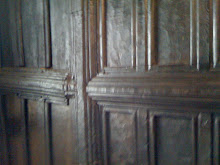
Detail of wood paneling at Trent Manor

“All that night the colonel kept strict watch in his house, and was the more vigilant because he understood from Sherborn that the troop intended not to quarter there, but only to refresh themselves and march. And accordingly (not so much as looking toward Trent) about two of the clock the next morning, they removed toward the sea coast.  This fear being over, the king rested all the time of his stay at Trent, without so much as the apprehension of a disturbance.”