Jane Lane and Charles II

Jane Lane and Charles II

Monday, September 5, 2011

September 4, 1651 - Spring Coppice, Hobbal Grange, and a journey

When Charles and his handful of friends arrived at Whiteladies at about three a.m. on September 4, 1651, the door was opened by George Penderel, one of five surviving staunchly Royalist brothers who were tenants of Charles Giffard of Boscobel.

Whiteladies in 1660


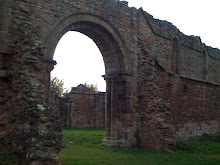
Ruins of Whiteladies Priory in October 2009
He asked if there was news from Worcester. Learning that it was the king himself who sought shelter, he not only welcomed Charles but led the king’s exhausted horse into the hall to be hidden before sending for his brothers William, who lived at Boscobel, and Richard, who lived at a small farm called Hobbal Grange.

Fields near Whiteladies
George Penderel gave Charles a biscuit and a glass of sack, and also the alarming news that there was a detachment of Commonwealth troops at Codsall, only three miles away, and that it would be safer for everyone if the king’s companions went to Tong Castle where General Leslie was with what remained of Charles’s cavalry.

Some of the king’s followers urged him to join General Leslie and make for Scotland, but Charles thought this “was absolutely impossible, knowing very well that the country would all rise upon us, and that men who had deserted me when they were in good order would never stand to me when they were beaten.” Charles still wanted to go to London, but his friends “with one voice begged of me not to tell them what I intended to do,” “because they knew not what they might be forced to confess.”
Inside the walls of Whiteladies, October 2009
So Charles gave his diamond encrusted George – the badge of the Order of the Garter – to Colonel Blague, distributed his gold among his servants, and gave his watch to Lord Wilmot, and all but Wilmot departed, taking Charles’s horse with them.

Richard Penderel
whom Charles called "Trusty Dick"
Charles stripped off his clothes breeches and buff coat and put on the clothes of a woodsman, provided by Richard Penderel – rough grey breeches, a threadbare green doublet, battered leather jerkin, heavy stockings darned at the knees, and a shapeless and greasy hat. He kept his boot stockings but cut off their embroidered tops. William Penderel shaved Charles and cut the hair off his head “as short on the top as the scissors would do it but leaving some about the ears according to the country mode,” and Charles smeared his face with soot. His fine boots had to go, but no one had shoes big enough for his feet, so he slit the borrowed shoes to have room enough for his toes.

Glove left by Charles
at Whiteladies
Charles changing into the clothes of a woodsman
One of seven paintings by Isaac Fuller
commissioned by Charles after his Restoration


Walls of Whiteladies and countryside, October 2009
It was now broad daylight, and troops of cavalry were looking for the king, so Richard Penderel took him into the Spring Coppice in the woods surrounding Whiteladies. It began to rain, so Richard went back to get a blanket for the king. Charles stayed in the woods all day, and “by greate good Fortune it rained all the time, which hindered them … from coming (into the Woods) to search for men that might be fledd thither.”
Richard Penderel’s sister, the wife of Frances Yates, brought the king a dish of scrambled eggs. He was happy for the food – he probably hadn’t had a meal since breakfast the day before – but worried. “Good woman,” he asked, “Can you be faithful to a distressed Cavalier?” “Yes, sir,” she promised him. “I will rather die than discover you.”

Joan Penderel
 the mother of the Penderel brothers


Woods near Whiteladies

It is possible Charles may have had some other company. I was intrigued to read in Allan Fea’s 1904 After Worcester Fight about a letter “supposed to have been written by Waller to St. Evremond” describing “an honest Worcestershire baronet” telling Charles after the Restoration about a blacksmith’s wife who “has sworn a child to Your Majesty.”

Fea goes on to describe a letter he had from “the daughter of the late Dean Howard of Lichfield, with reference to a family of the name of Radford, who formerly lived at Shakerley (a village a little over a mile to the southwest of Whiteladies.” A member of that family, the letter said, had married Nan Clarges before she married George Monck, Duke of Albemarle, who was enormously instrumental in bringing about Charles’s Restoration. “About the years 1850-1868 there were three generations … all blacksmiths. They all had the same swarthy complexions, long noses, large drooping eyelids, and dark eyes,” and the old curate, the Rev. J. Dale, said “these Radfords were descended from King Charles.”
Countryside near Boscobel and Whiteladies

On the road to Whiteladies from Boscobel
October 2009 - photo by Alice Northgreaves

But Charles had plenty of time to worry, too. He had asked Richard Penderel what men of quality he knew on the way to London. Penderel didn’t know any. And from the coppice Charles could see a party of Cromwell’s cavalry pass on the road, looking for him and other Royalists fleeing Worcester. Getting to London might be as impossible as reaching Scotland. The next option was Wales, which was lightly held, had plenty of Royalists, including some he knew, and also had the port of Swansea, which had frequent trade with France.

Blackberries on road between Boscobel and Whiteladies

Hobbal Grange around the turn of the 20th century
from Allan Fea's The Flight of the King
At about five o’clock Richard Penderel brought Charles out of the woods to his own house, Hobbal Grange, to give him supper of bacon and eggs. Charles told Richard of the plan to head for Wales, and visited with Richard’s little girl and elderly mother before he and Richard set out at dusk for the ferry crossing over the Severn halfway between Bridgenorth and Shrewsubry, about nine miles away.

Hobbal Grange in about 1933
photo by H.P. Kingston included in The Wanderings of
Charles II in Staffordshire and Shropshire
The journey was across rough country, through swamps and streams and thorn hedges. Charles’s feet, in the too small shoes, were in agony, and for the only time in his odyssey he was ready to give up, throwing himself on the ground and crying in despair that he would rather stay there until day and risk being caught than continue. Richard took a deep breath and coaxed the king to his feet, “sometimes promising that the way should be better, and sometimes assuring him that he had but little further to go.”

Stone wall on road between Boscobel and Whiteladies
Meanwhile, John Penderel had left Charles’s friend Lord Wilmot and his horses in separate neighboring houses and gone looking for a safer hiding place. He happened to run into John Huddleston, a Catholic priest who had fought for Charles I in the Civil Wars and who served as tutor and chaplain at Moseley Hall, a few miles away. Huddleston took John Penderel to Thomas Whitgreave, the owner of Moseley, who urged that Wilmot be brought to his house for hiding.

Father John Huddleston
Decades later, he effected Charles's
deathbed conversion to Catholocism


Moseley Old Hall 2009
photo by Alice Northgreaves
Whitgreave was a Catholic, and Moseley boasted a priest hole, something frequently found in the houses of Recusants during the years when it was against the law to be a Papist. Priest holes were hiding spaces built between floors or otherwise hidden in the architecture of houses. The hiding holes were small, perhaps four feet square and maybe not even that high, just big enough for a man or contraband such as crucifixes. The entry hatches were sometimes in closets and covered by chamber pots, the smell of which would throw off any searching dogs.

Wilmot had a safe refuge, but Moseley Hall was too near the road to chance taking in strange horses. So Whitgreave sent to Colonel John Lane at nearby Bentley Hall to ask if he would shelter Wilmot’s horses. Lane had served under Wilmot and was happy to do what he could, so he took the horses into his stables, and promised to go to Moseley the next night to see Wilmot. And thus the fate of John’s sister, Jane Lane, was about to become entwined with that of the king.

Colonel John Lane of Bentley

Sources and Further Reading:

If you want to read more about the Royal Miracle, as Charles’s escape came to be called, I can recommend Charles II’s Escape from Worcester, edited by William Matthews, which presents Pepys’s transcription of Charles’s account and his edited version side by side, as well as other contemporary accounts; The Escape of Charles II After the Battle of Worcester by Richard Ollard; A. M. Broadley’s 1912 The Royal Miracle: A Collection of Rare Tracts, Broadsides, Letters, Prints, & Ballads Concerning the Wanderings of Charles II After the Battle of Worcester, which also chronicles the delightfully daffy 1911 reenactment of the events; both the 1897 and 1908 editions of The Flight of the King by Allan Fea, as well as his After Worcester Fight; The Boscobel Tracts, a collection of contemporary accounts edited by J. Hughes and published in 1857; The Wanderings of Charles II in Staffordshire and Shropshire by H.P. Kingston; and Jean Gordon Hughes’s A King in the Oak Tree.

Most of the old photos, drawings, and engravings used in subsequent posts are from Fea's books and The Royal Miracle.
Also of interest is the blog “In Pursuit of History,” by Tom Skyes, who is coincidentally also writing about Charles’s escape right now. http://inpursuitofhistory.com/2011/08/21/in-pursuit-of-charles-ii-boscobel

Sunday, September 4, 2011

September 3, 1651 - The Battle of Worcester

September 3, 2011 is the 360th anniversary of the 1651 Battle of Worcester, when the defeat of Charles II by Cromwell’s forces set off one of the most astonishing episodes in British history – Charles’s narrow escape from the battlefield and desperate six-week odyssey to reach safety in France, which came to be known as the Royal Miracle, because of the numerous times he so narrowly eluded discovery and capture.
Charles II in about 1651
a miniature by Samuel Cooper
Charles was a noticeable man - six feet two and very dark - and a reward of £1000 was offered for his capture, yet time after time he rode right under the noses of Cromwell's soldiers without being discovered.

The 21-year-old Charles was in grave danger of capture and death, but the weeks he spent on the run were a strongly formative experience, and after the Restoration he told the story frequently for the rest of his life. The hardships he endured gave him an intimate understanding of the common people like no other king had had. If he hadn't escaped, England’s history would likely have come out quite differently.

My second book, The September Queen, is the first fictional account of Jane Lane, who risked her life to help Charles, embarking on a perilous and romantic journey with the handsome young king disguised as her servant. The book will be released in the U.S. on November 1, and until then I’ll be blogging regularly about the daily events in Charles’s peregrinations.

Plan of Worcester in 1651
September 3, 1651 - The Battle of Worcester

On July 31, 1651, Charles set out from Stirling in Scotland with 3,000-4,000 cavalry and 7,000-9,000 footsoldiers, mostly of them Scottish highlanders. He crossed into England, hoping for a popular uprising of supporters, and on August 8 was proclaimed king at Penrith and Rokeby, but Carlisle failed to welcome him, and as he marched south his numbers dwindled as discouraged followers deserted.

Charles in 1651, crowned as King of Scotalnd

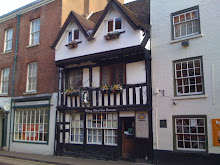
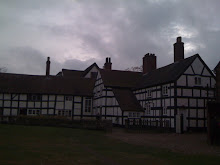
Half-timbered buildings in Worcester which would have
been there when Worcester was Charles's headquarters
Bridge over the Severn, Worcester


Wall on the riverside, Worcester

Harried by Cromwell’s forces following behind, after two weeks of rapid marches, on August 22 Charles and his exhausted men, many of them barefoot, limped into Worcester, where the mayor and sheriff proclaimed him King of Great Britain, France, and Ireland. He issued a general pardon for all who had fought against his father in the civil war, called for his subjects to join him to restore “the quiet, the liberty, and the laws of the English nation,” and rallied his followers in the riverside meadows near the cathedral.


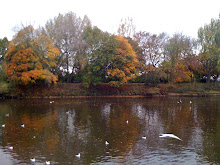
Alice on the river path near the cathedral, Worcester
Expecting the arrival of the Parliamentary army, the royalists fortified Fort Royal and blew up bridges over the River Severn so that the enemy would not be able to use them.

On August 29, Cromwell’s army -- better equipped and supplied and vastly outnumbering Charles’s men -- arrived at Red Hill, a mile outside Worcester. Over the next few days there was some artillery barrage, but Cromwell made no move to attack the royalists within the city walls until September 3, the first anniversary of his victory at the Battle of Dunbar.

The great hall in the Commandery,
Royalist headquarters in Worcester
The Commandery from the street, the scene of desperate fighting


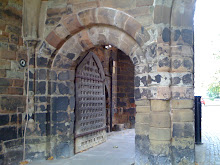
Edgar Gate, one of the medieval gates in the city's walls

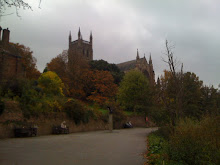
Me on top of Worcester Cathedral,
looking south to where Cromwell's forces gathered
and the battle began
Charles began September 3 atop Worcester Cathedral with his generals, watching the approach of Cromwell’s forces and planning their strategy.
The green area is the hilltop site of Fort Royal
view from Worcester Cathedral
They knew their situation was desperate, and that for Charles the outcome of the day would be “a crown or a coffin.” The battle was fought on several fronts. Early in the day the Royalists prevailed as they attacked the weakened main force to the south and east, capturing some artillery, and Charles himself was in the thick of the fighting. But eventually Cromwell’s men captured Fort Royal, turning its cannons on the king’s army, forcing the Royalists to scramble to get back within the city walls. The Scottish cavalry under Leslie failed to join the battle, which might have saved the day. And once the city gates were breached, the streets were a turmoil of hand to hand fighting, with panicked cavalry nearly running down Charles as he tried to rally his men.
The Town Hall, Worcester
The streets near here saw some of the most bloody fighting

View north from atop Worcester Cathedral
The house that was Charles's lodgings
By late in the day it was clear that the day was lost and with it the Royalist cause, and all that was left was to preserve the life of the king at all costs. His followers mounted a desperate last stand near the town hall, giving Charles just time to get back to his lodgings where he threw off his armor and begged his friend Lord Wilmot to meet him outside St. Martin’s Gate with fresh horses if it were possible.
The street near the site of St. Martin's Gate
The back entrance of Charles's lodgings, which allowed his escape
As the sun was setting, he left the building by the back door while Cromwell’s men were entering at the front, and dashed the few yards to the gate.

"The King's House," Worcester.  An 18th century view
of the building that was Charles's lodgings, from which he narrowly escaped
View of Worcester Cathedral from the hill where Fort Royal stood
Fort Royal - flower bed on site of gun emplacement
the hilltop fort saw brutal slaughter of Charles's men
Outside the city walls the king was joined by his surviving officers and a few hundred other men. Charles was for rallying what was left of his forces and returning to the city but was convinced that it would be pointless, and that it was imperative for him not to be taken prisoner, so he and the remnants of his army rode northward and away from Worcester. But his survival depended on travelling as quickly and quietly as possible, so he broke away from the main body of refugees with a handful of supporters to consider the options.

King's Arms at Ombersley, through which Charles passed escaping from Worcester
Charles wanted to race for London, hoping to board a ship and sail for France or Spain before news of his defeat had reached the city. But London was far off, and the Earl of Derby suggested that he make for Brewood, a heavily Catholic area of Shropshire where Derby had recently found shelter at an old hunting lodge called Boscobel after his defeat at Wigan.

Earl of Derby
he suggested Charles flee to Boscobel
Among those still with the king was Charles Giffard, the owner of Boscobel. He said that the house had recently been searched, and that the king might be better hidden at Whiteladies, an old priory now owned by his family that lay in the woods near Boscobel.

Boscobel and Whiteladies in 1660
The ruins of Whiteladies in 1809
The exhausted king agreed, and guided by Derby and a local man named Francis Yates, he and his friends rode through the night, through Stourbridge, where they inexplicably spoke French to avoid detection, reaching Whiteladies, fifty miles north of Worcester, at about three a.m.

Ruins of Whiteladies Priory in October 2009
Sources and futher reading: I'll post many sources for the story of Charles's flight.  For a good overview of the battle, please see Worcester 1651 by Malcolm Atkin.

Saturday, December 4, 2010

New title!

The book formerly known as "The Royal Miracle" is now titled "The September Queen"! Artwork is in progress and I can't wait to see what the cover will look like! I long ago fell way behind in chronicling my research adventures as my life was taken over by trying to complete the book on a rather punishing deadline. Eventually I'll try to post more of my travels with Alice and all around the internet, in search of knowledge about riding pillion, Jane and Charles's route, the genealogical history of the Lane family, Jane's correspondence with Elizabeth of Bohemia (Charles's aunt, the daughter of Charles I) and much more.

Tuesday, March 16, 2010

Jane - at last!

Getting back to the research trip in October and November…

On Friday, October 30, Alice and I set out from Shropshire on the part of our journey that would follow Jane and Charles’s travels. Used to California highways, I had set what proved to be an unrealistically ambitious schedule for us.

I had been sad to learn that Jane Lane’s home, Bentley Hall, near Walsall in Staffordshire, was no longer standing, but the helpful staff at Moseley Hall gave us directions to find a cairn that had been erected on the site, saying that it was opposite the Lane Arms pub.

When we got to the Bentley area, we were confused. The Lane Arms was unfortunately burned down, and though we looked for 20 or 30 minutes, we didn’t see a cairn, either across Wolverhampton Road or Queen Elizabeth Road. On the site where I thought the hall must have stood, just off the northeast corner of Wolverhampton Road and Queen Elizabeth Road, there was nothing but what looked like the beginning of a construction project. How depressing! Not only was Bentley Hall gone, but its remnants were going to be buried forever! It was also dispiriting to find that Bentley is now a somewhat grim corner of the outskirts of Birmingham.

Having come all the way from California to research the book, I didn’t want to give up without another try. We’d had good luck so far on the trip just asking local people to help us find places we were looking for, so we popped into the local Costcutter to ask if anyone knew anything about Bentley Hall. We were in luck! A lady told us that Pauline Gibson, who lived just down the street, knew everything about the area. So we intrepidly found the house and knocked on the door. No one home! A helpful neighbor promised to give Pauline my note, but didn’t know anything about Bentley Hall.

Now what to do? We didn’t know when Pauline might be back and we had a lot of ground to cover that day. Maybe the cairn had been pulled down or we were looking in the wrong place. But on a whim, I decided to make use of modern technology – my iPhone! I Googled “Bentley Hall Staffordshire,” and was amazed and pleased to find an article by Michael Shaw and Danny McAree about the rediscovery of the ruins of Bentley Hall only a few months earlier! We were in the right place, or pretty close. It was very exciting to realize that we were standing on or near the spot where Bentley Hall had been, where Charles II had arrived in the dead of night and set off with Jane Lane on their great adventure.
Pauline was kind enough to call me later in the day. Unfortunately by that point we were near Packington Hall in Warwickshire, where Jane lived later, when she married Sir Clement Fisher, and couldn’t go back to Bentley. But at least we knew we had been close.

Since then, I’ve found further information about the site on line. Apparently the cairn was there, we just didn’t go quite north enough of Wolverhampton Road.

I’ve also been delighted to discover historical maps online that give a pretty good idea of what the Bentley area must have looked like in 1651. It’s very interesting to see that the present day Wolverhampton Road still follows exactly the path it did then, and that the present Bentley Mill Lane is in fact where a little road ran from Bentley Hall, which was about a quarter mile north of the Wolverhampton Road, down to the mill.

Shaw and McAree’s article can be found at:
http://www.localhistory.scit.wlv.ac.uk/articles/Hall/BentleyHall.htm

Another article about Bentley Hall, “The Secrets of the Stone,” can be found at:
http://www.walsall.gov.uk/index/leisure_and_culture/parks_and_countryside/bentley_cairn_the_secrets_of_the_stone.htm

The 1805 ordnance map of the Bentley area, and other historical maps, can be seen at:
http://www.visionofbritain.org.uk/place/place_page.jsp?p_id=7881

Saturday, January 30, 2010

Hot Off the Presses

Curiously, just after I ordered the full-sized reprint of the map from The Natural History of Staffordshire, I discovered that The Malthouse Press has just published a reduced size edition of the book - about 5 by 8 inches, paperback, and unfortunately without the map and without many of the plates, but still a good find, and at $28.50 much more affordable than even the folio-sized modern facsimile of the whole book. I found it (and several other rare books I needed for this project) at Powells (powells.com), definitely worth a look!


The Malthouse Press
Grange Cottage, Malthouse Lane
Barlaston, Staffordshire ST12 9AQ, UK
timcockin@yahoo.com
(01782)372067
"The Pocket Plot" ISBN 978-0-953918-7-6

Sunday, January 17, 2010

Maps. Maps, and More Maps

The Royal Miracle is very much about journeys. First Charles fled when he was routed at the Battle of Worcester. The first plan discussed among those with him was to escape back to Scotland. It rapidly became apparent that was too risky and that he would better off taking refuge at Whiteladies in Shropshire while his friend Lord Wilmot found a way for him to get out of the country. The two of them secretly agreed to separately make their way back to London and meet at the sign of the Three Cranes in the Vintry, asking for each other under the name Mr. Ashburnham. They didn't tell their friends their plans - indeed, their friends begged not to know their plans, so they couldn't be forced into disclosing them. Then Charles and Wilmot decided that the better plan was to cross the Severn River and get into Wales, which was less heavily occupied than England, and leave the country at Swansea or another port. But that plan was discarded when they learned that the river was heavily guarded and would be impossible to cross without capture.

It was at this point that Jane came into the story. She had a pass for her and a manservant to travel from her home at Bentley, in Staffordshire, to Abbots Leigh, near Bristol, to visit a friend who was about to have a baby. Charles, disguised as that servant, made the trip with her, riding before her. When Bristol, too, was ruled out, they set out further south, to Trent in Dorset, with the intention of Charles finding a way out of the country at Weymouth in the south. Jane left Charles at Trent, believing him safe, but in fact it took another three weeks of running and hiding before he was able to set sail for France from Shoreham, near Brighthelmstone (now Brighton).

But Jane's travels weren't over when she got back to Bentley. She learned that her part in helping the King had been discovered, and that she, too, had to escape the country. So she and her brother walked to Yarmouth, on the east coast,and from there got passage to France.

But how did all this traveling take place? Charles's journey is pretty well documented, since many of the people involved later wrote accounts of the adventure, so that there are sometimes hour-by-hour, field-by-field descriptions of his route and what he did.

Jane's journey lies in shadows. And needless to say, the roads and means of travel in England have changed enormously since 1651. For instance, Birmingham, now the second largest city in England, is shown on period maps as a tiny hamlet, much smaller than Stafford, Lichfield, and even than Wolverhampton, Tamworth, and Newport.

Fortunately, I've discovered a wealth of information that is helping me figure out what the country looked like and how Jane probably traveled. One excellent source is a book I found at the shop of the British Library, Maps for Historians by Paul Hindle. This pointed me in the direction of finding maps that shed a lot of light on Jane's path.

Robert Plot's The Natural History of Staffordshire (1686) includes a huge foldout map of Staffordshire (where Jane lived) and plates showing Stafford, Lichfield, and many of the principal estates in the county, including Bentley and Blithfield, the home of her grandparents Walter Bagot and Elizabeth Cave Bagot. I was able to borrow it through Interlibrary Loan (a fantastic service - ask at your local library if you're looking for hard-to-find books). I really wanted the map, but the price of the one original or the book I found (about $1000!) was a little prohibitive. Even used modern facsimiles of the book are going for about $200 on Alibris and ABE. Fortunately, I was able to order a reprint of the map from Reg Blagden through ABE for only $25, and also found A Staffordshire Armorial for 1680 by Richard Williams, a modern booklet offering further information on the various families whose coats of arms are displayed on Plot's map, which I bought from Richard Sylvanus Williams Books through ABE.

Another fantastic source I learned about from Hingle's book is John Ogilby's Britannia, a Roadmap of England and Wales from 1675. I had found copies of a 1970 reprint for sale starting at about $80, but was ecstatic to discover on Biblio.com that The Captain's Bookshelf in North Carolina had a 1939 reprint for $45, which proved to be in fantastic condition - 100 full-color plates of maps from Jane's time! Ogilby's format is a little odd - the roads are depicted on scrolls, about 6 side by side across a page, which you read from bottom to top. But he actually measured the distances, and the scale of the map is one inch to the mile, so they offer fantastic detail. And he sets forth all the principal routes a traveler of the time might have needed. One of these is Cambridge to Coventry, the reverse of which was probably part of the way Jane traveled to get from Bentley to Yarmouth.

I still have to get caught up and describe the part of my trip to England that involved following in Jane and Charles's footsteps as they traveled from Bentley to Long Marston in Warwickshire, then to Abbots Leigh, then to Trent in Dorset, which was invaluable in being able to evoke their trip, but these maps fill in the gaps and are really helping me place myself in Jane's shoes on the road in England in the fall and winter of 1651.

Thursday, December 31, 2009

Running Into Charles at the Airport

I fell sadly behind on blogging in my last few days in England - the research adventures were piling up thick and fast, and it was hard to find the time to record what I was doing. I will get caught up, soon. But I will leave 2009 by reporting this little tidbit: when I flew home on November 11, who should be down the counter checking into the same flight but Rufus Sewell, who, among other things, did a really good job playing Charles II in the British miniseries "Charles II: The Power and the Passion." I made so bold as to accost him and tell him I was a big fan of his work, particularly his portrayal of Charles. I gave him my card, and he grinned and said, "The Darling Strumpet! I'll have to find that!" So if you're seeing this, Mr. Sewell, thanks! You made my day!